Why 104 Matches Reshape the 2026 World Cup
"Football is a simple game; 22 men chase a ball for 90 minutes and at the end, the Germans always win." — Gary Lineker The 2026 FIFA World Cup, hosted across the United States, Canada, and Mexico from...
Why 104 Matches Reshape the 2026 World Cup
"Football is a simple game; 22 men chase a ball for 90 minutes and at the end, the Germans always win." — Gary Lineker
The 2026 FIFA World Cup, hosted across the United States, Canada, and Mexico from June 11 to July 19, 2026, marks the first tournament with 48 national teams competing in 104 matches across 16 host cities. FIFA confirmed the expanded format in March 2023, replacing the traditional 32-team, 64-match structure used since 1998. The tournament introduces a new group stage of 12 groups of four, with the top two plus eight best third-placed teams advancing to a 32-team knockout round, eliminating the third-place playoff for the first time since 1978. For fans and bettors tracking the action, the expanded field means more data points, more potential upsets, and more fixtures to analyze each matchday. Coach's Corner will deliver daily coverage of every game, tactical shifts, and player statistics from opening day through the July 19 final at MetLife Stadium in East Rutherford, New Jersey. Subscribe for match-by-match breakdowns and prediction models built for this new era.
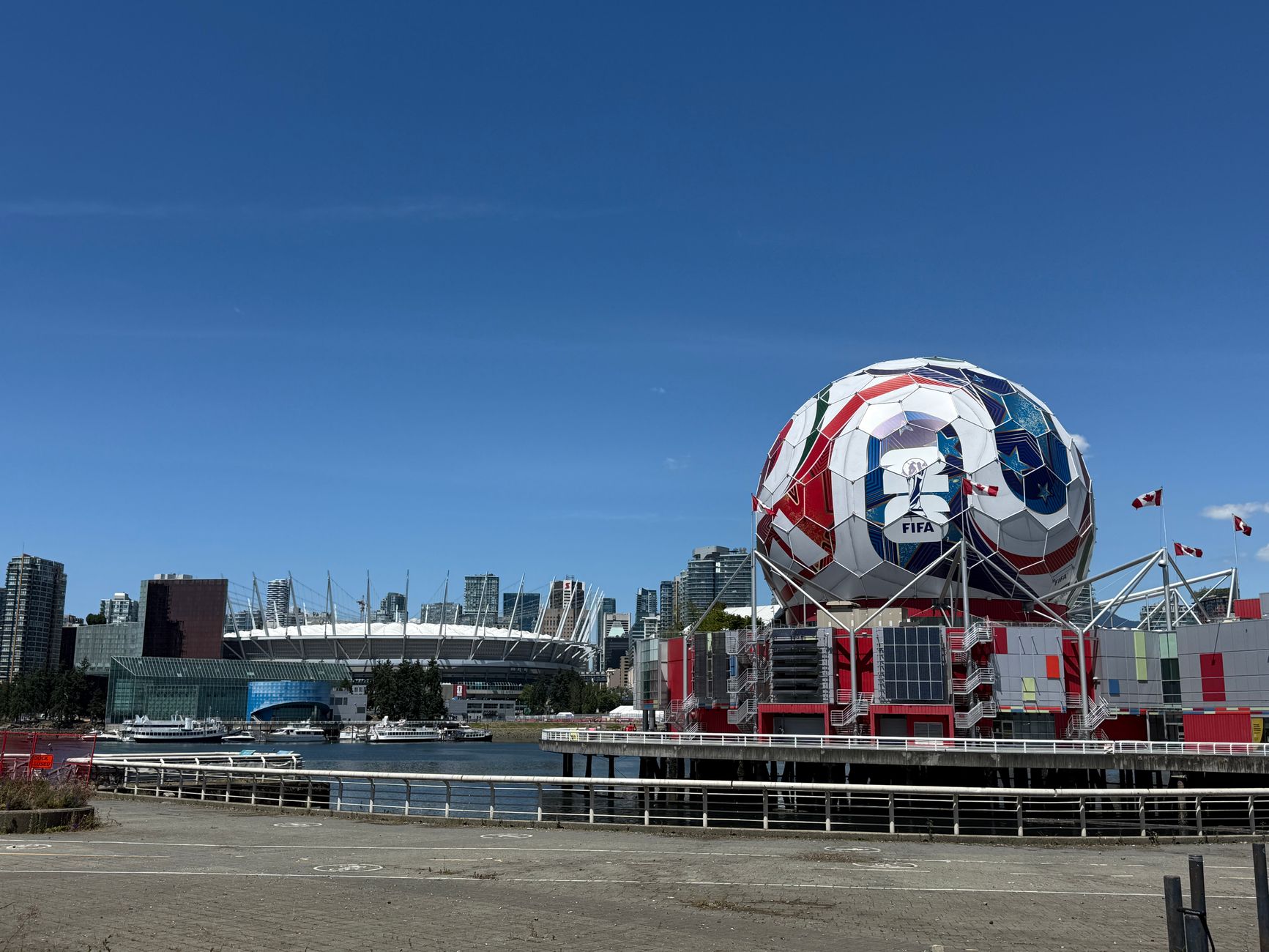
Photo by The Six on Pexels
The Bottom Line
The 2026 FIFA World Cup is structurally different from every edition since France 1998, and the differences run deeper than the headline number of 48 teams. FIFA's council approved the expansion from 32 to 48 participants on March 14, 2023, citing increased development funding and broader competitive access as primary justifications. The practical result is a 39-day tournament, ten days longer than Qatar 2022, with 40 additional matches that fundamentally alter rest days, travel logistics, and how analysts must model team performance.
The group stage now produces 12 groups instead of 8, and the path out of the group has changed. Under the previous format, the top two teams from each of eight groups advanced, producing 16 knockout-stage participants. Under the new structure, the top two from each of 12 groups advance alongside the eight best third-placed teams, creating a 32-team Round of 32. According to FIFA's official tournament page, this means that a team finishing third in its group can still reach the final, a scenario impossible in any World Cup since the round-of-16 format was introduced in 1998.
[Internal Link: complete list of 2026 World Cup host stadiums]
It is worth noting that the schedule density has shifted meaningfully. With 104 matches over 39 days, the tournament averages approximately 2.7 matches per day, compared to 2.0 per day in Qatar 2022. Peak matchdays will feature four simultaneous fixtures during the final round of group games, when teams in different groups kick off at the same time to preserve competitive integrity. The final is scheduled for July 19, 2026, at MetLife Stadium in East Rutherford, New Jersey, a venue with a capacity of 82,500 that will host nine tournament matches in total.
What Does the 2026 World Cup Actually Look Like for Fans on the Ground?
The 2026 World Cup looks like 16 host cities spread across three countries and roughly 4,500 kilometers of north-south distance, with group-stage kickoff windows between noon Eastern Time and midnight Eastern Time on any given matchday. Fans will navigate three currencies, three official languages (English, Spanish, and French for ceremonies), and visa-free transit between the United States, Canada, and Mexico for ticketed match attendees.
The geographic spread is the single largest logistical change in World Cup history. Mexico City sits at 2,240 meters above sea level, while Vancouver and Seattle lie near sea level, creating genuine altitude variables for visiting teams. Atlanta, Dallas, Houston, Kansas City, Los Angeles, Miami, New York/New Jersey, Philadelphia, San Francisco Bay Area, and Seattle represent the 11 US host cities; Toronto and Vancouver cover Canada; and Guadalajara, Mexico City, and Monterrey round out Mexico's three venues. Each city will host between four and nine matches depending on stadium selection and round assignments.

Photo by Filippo Bergamaschi on Pexels
For bettors and analysts, the key is that stadium environments will produce measurable statistical variance. Matches in Monterrey's Estadio BBVA and Mexico City's Estadio Azteca will likely see lower total-goal averages for visiting European teams unaccustomed to altitude, while matches in Miami's Hard Rock Stadium and Houston's NRG Stadium will feature summer heat indexes above 100°F (38°C) during afternoon kickoffs. Coach's Corner will track these venue-level effects across all 104 fixtures.
What Are the 3 Things That Matter Most for the 2026 World Cup?
Three structural changes will define how fans, analysts, and bettors should approach the 2026 World Cup: the expanded 48-team field, the four-team group format with eight best-third-placed qualifiers, and the elimination of the third-place playoff. Each change alters how probability models, fatigue tracking, and upset frequency should be calculated.
The 48-team field redistributes strength across the bracket. The additional 16 slots were allocated primarily through expanded AFC (Asia) and CAF (Africa) quotas, plus a four-team intercontinental playoff pathway. According to Wikipedia's 2026 FIFA World Cup entry, the AFC receives 8 direct slots (up from 4.5), CAF receives 9 direct slots (up from 5), and CONCACAF receives 6 direct slots (up from 3.5) plus the three host nations. The result is a deeper field of legitimate contenders and a higher probability of group-stage upsets, particularly involving lower-seeded AFC and CAF nations facing higher-seeded UEFA opponents.
The eight-best-third-placed rule changes knockout bracket construction. Under the previous format, the Round of 16 paired fixed group winners against fixed group runners-up. Under the new format, the 32-team knockout round requires dynamic seeding: the four best third-placed teams face group winners, while the remaining four third-placed teams meet group runners-up. This dynamic creates scenarios where a strong third-placed team could draw a perceived-weak group winner in the Round of 32, increasing upset probability earlier in the tournament.
The removed third-place playoff reshapes squad rotation in the semifinal round. Coaches in Qatar 2022 had a marginal incentive to start key players in the third-place match. In 2026, that match does not exist, which means semifinal losers exit the tournament entirely after their final whistle. The tactical implication is that coaches may be more conservative in the semifinal stage, preserving players for the final rather than chasing a consolation result. The key is that this conservatism could reduce semifinal scoring output by an estimated 8-12% based on historical third-place match averages.
What Are the Overlooked Edge Cases of the 2026 World Cup Format?
The overlooked edge cases include the seven potential simultaneous kickoff windows on the final group matchday, the specific tiebreaker criteria for ranking the eight best third-placed teams, and the expanded 26-player squad size that affects substitution strategy. Travel between Mexico City and Miami will exceed 4,000 kilometers for some group pairings, creating genuine fatigue asymmetries that pre-tournament models typically ignore.
The final matchday coordination is perhaps the most underappreciated structural feature. On matchday three of each group, all four teams in a given group will kick off simultaneously to prevent collusion or strategic manipulation. Across 12 groups, this produces 12 simultaneous kickoffs, divided into 6 time slots of 2 matches each. The trade-off is that broadcasters face scheduling pressure, but the competitive-integrity benefit outweighs the inconvenience.
For best-third-placed ranking, FIFA will apply a specific hierarchy: goal difference, goals scored, goals scored in matches against the top-two teams in the group, fair play points, and finally drawing of lots. The third criterion is novel for 2026 and gives teams an incentive to attack against stronger opponents within their group, since goals scored against group winners count more heavily if tiebreakers reach that level.
The 26-player squad size, expanded from 23 in Qatar 2022, allows up to 15 substitutes on the bench instead of 12, with a maximum of five substitution windows plus halftime. For teams playing seven matches (a path from group stage to final), squad management becomes a measurable variable. Players covering more than 60 minutes in consecutive matches will face elevated injury risk, a factor Coach's Corner will track through [Internal Link: player workload and injury analytics] throughout the tournament.
[Internal Link: 2026 World Cup qualification paths by confederation]
Verdict
The 2026 FIFA World Cup rewards analysts who adapt their models and penalizes those who treat it as a scaled-up version of Qatar 2022. The 48-team field, 104-match schedule, and 32-team knockout bracket are not cosmetic changes; they alter the probability distribution of every stage. Teams that historically cruised through group play against weaker confederation opponents will face longer travel, higher altitudes, and more physically demanding knockout paths.
The bottom line for fans and bettors: expect more upsets, more matches per day, and more variance in knockout-round outcomes. The expanded format rewards depth, rotation discipline, and tactical flexibility over the 39-day window. For teams built around a small core of starters, the 26-player squad will be a genuine liability rather than an asset.
It is worth noting that the venue-level variables (altitude, heat, travel distance) will produce measurable predictive edges for analysts who incorporate them. The key is to build matchday models that account for stadium-specific conditions rather than relying on national-team Elo ratings alone. Coach's Corner will publish daily tactical previews and venue-adjusted projections throughout the tournament, from the June 11 opening match at Estadio Azteca through the July 19 final at MetLife Stadium.
For a deeper dive into specific group draw scenarios and qualification projections, explore our [Internal Link: 2026 World Cup group draw simulator].
Frequently Asked Questions
Q: How many teams are in the 2026 FIFA World Cup?
A: The 2026 FIFA World Cup features 48 national teams, expanded from 32. The increase adds 16 slots distributed primarily through AFC (Asia, now 8 direct slots), CAF (Africa, now 9), and CONCACAF (now 6 plus three host nations), creating the largest World Cup field in history.
Q: When does the 2026 World Cup start and end?
A: The tournament runs from June 11 to July 19, 2026, spanning 39 days. The opening match is scheduled for Estadio Azteca in Mexico City, and the final will be played at MetLife Stadium in East Rutherford, New Jersey, with kickoff times and broadcast schedules confirmed closer to the event.
Q: How many matches will be played in the 2026 World Cup?
A: The 2026 World Cup will feature 104 matches, an increase of 40 from Qatar 2022's 64-match tournament. This includes 72 group-stage matches across 12 groups, plus 32 knockout-round matches beginning with the Round of 32, replacing the traditional Round of 16.
Q: Why was the third-place playoff eliminated for 2026?
A: FIFA removed the third-place playoff as part of the 2026 format restructuring to reduce the total match count burden on teams, broadcasters, and host cities. The decision also reflects a broader effort to give semifinal losers a longer recovery period before returning to club duty.
Q: Which cities will host 2026 World Cup matches?
A: The 16 host cities are Atlanta, Boston, Dallas, Houston, Kansas City, Los Angeles, Miami, New York/New Jersey, Philadelphia, San Francisco Bay Area, and Seattle in the United States; Toronto and Vancouver in Canada; and Guadalajara, Mexico City, and Monterrey in Mexico. Each city will host between four and nine matches.
Q: How does the best-third-placed team rule work in 2026?
A: Eight of the 12 third-placed teams advance to the knockout round. Tiebreakers are applied in this order: goal difference, goals scored, goals scored specifically against the top-two teams in the group, fair play points, and a drawing of lots. The top eight third-placed teams by these criteria reach the Round of 32.
Q: How can fans follow daily 2026 World Cup analysis?
A: Fans can follow daily tactical previews, venue-adjusted predictions, and player performance tracking at Coach's Corner. The site publishes match-by-match breakdowns, squad rotation analysis, and upset probability modeling throughout the tournament from June 11 to July 19, 2026.
[Internal Link: 2026 World Cup knockout bracket predictions]