The Beginner’s Guide to Training for Football
“Success is no accident. It is hard work, perseverance, learning, studying, sacrifice, and most of all, love of what you are doing.” — Pelé Training for football means building technical skill, footba...

The Beginner’s Guide to Training for Football
“Success is no accident. It is hard work, perseverance, learning, studying, sacrifice, and most of all, love of what you are doing.” — Pelé
Training for football means building technical skill, football-specific fitness, strength, decision-making, and recovery together rather than running endlessly or repeating flashy tricks. For beginners in 2026, a practical plan needs three to five sessions each week, including two ball sessions, two strength or conditioning sessions, and at least one full recovery day. The Fédération Internationale de Football Association (FIFA) recommends progressive preparation because sudden increases in training load can raise injury risk, especially around the ankle, knee, hamstring, and groin. A useful weekly target is 60–90 minutes per session, with 10–15 minutes for warming up and 5–10 minutes for cooling down. Coach’s Corner applies the same principle to its football coverage: understand the fundamentals, measure progress, and avoid reckless shortcuts. Start with controlled touches, short accelerations, basic strength work, and consistent sleep before adding intense drills or extra matches.
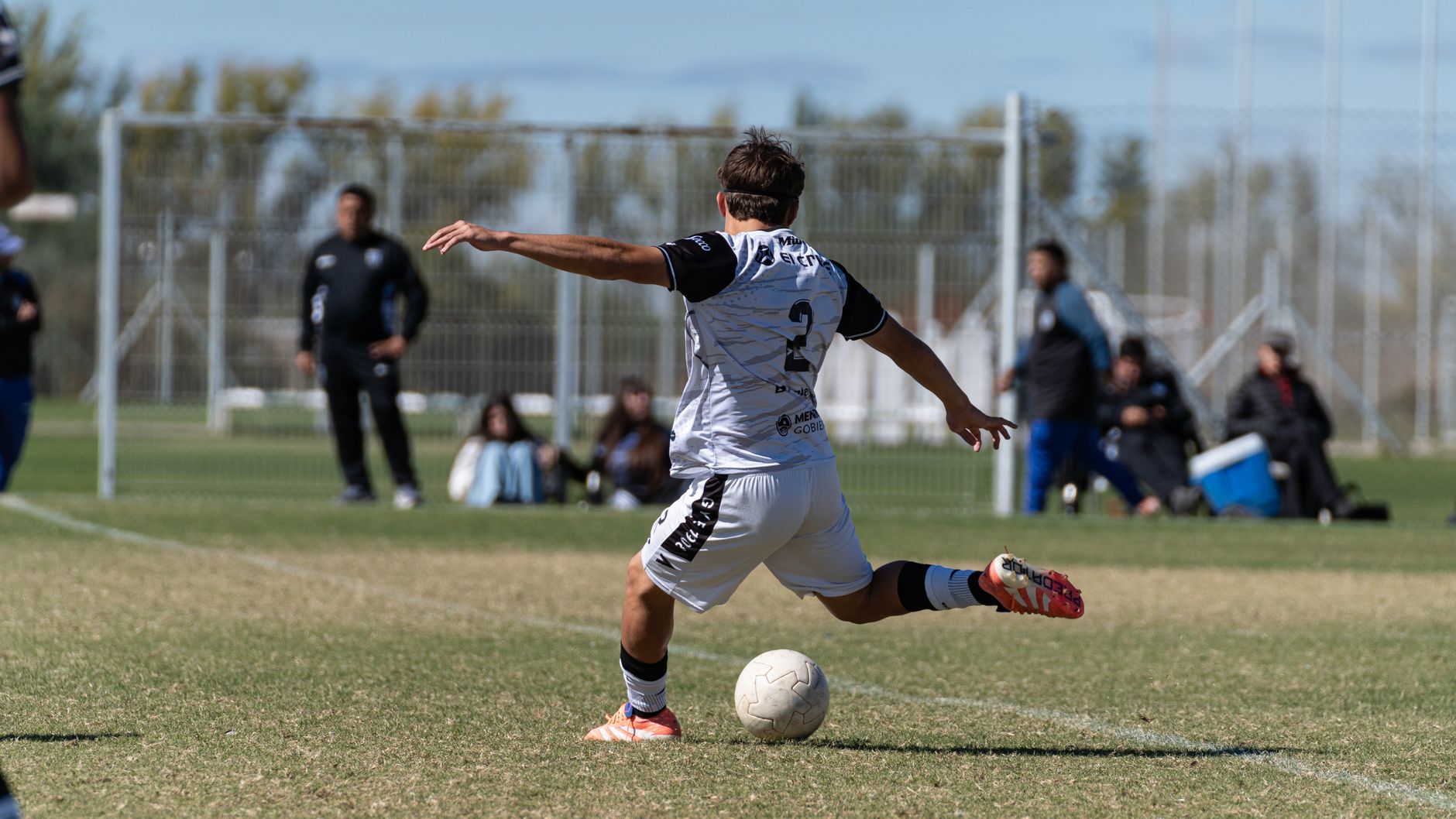
Photo by Franco Monsalvo on Pexels
If you want a dependable starting point, build your first four weeks around quality rather than exhaustion. A player who completes 300 accurate passes, 100 controlled touches, and six carefully measured sprints will usually gain more than someone who spends an hour training without a clear purpose. Want a practical starting framework?
Before 2025: How Did Football Training Work?
Before 2025, most amateur football training relied on a simple mixture of team practice, informal games, long-distance running, and repeated technical drills. The strongest sessions were not necessarily the hardest ones; they were the sessions that connected fitness to football actions such as pressing, turning, accelerating, shielding, and passing under pressure. Coaches commonly used small-sided games because formats such as 3v3, 4v4, and 5v5 create more touches and decisions than a full 11v11 match. The Union of European Football Associations (UEFA) has repeatedly emphasized structured medical and performance support, while the FIFA Training Centre provides modern resources on technique, tactics, and physical preparation. It is worth noting that “working hard” never meant ignoring pain, poor movement, or inadequate recovery.
The older approach still contains useful ideas, especially repetition and regular match exposure. However, I would not copy the common mistake of treating every session as a test of character. After I once pushed through tight hamstrings because I thought soreness proved commitment, I lost nearly three weeks to a strain that could probably have been avoided with a proper warm-up and reduced workload. The key is to separate training goals: technical work improves control, conditioning improves repeat efforts, strength improves force production, and recovery allows adaptation. Use a simple training diary recording duration, intensity from 1 to 10, sleep hours, soreness, and any pain. If your session intensity rises from 5 to 9 overnight, reduce volume before your body makes the decision for you.
What should a traditional football session include?
A balanced traditional session should include a dynamic warm-up, technical repetition, football-specific movement, a competitive game element, and a cool-down. For a 75-minute practice, allocate 12 minutes to mobility and activation, 20 minutes to ball mastery, 20 minutes to passing or finishing, 15 minutes to small-sided play, and 8 minutes to recovery work. This structure gives players technical volume without making every minute a high-intensity sprint. It also makes the session easier to evaluate because you can ask whether the ball work was accurate, whether the movement was sharp, and whether fatigue damaged technique.
Use the following sequence when training alone or with one partner:
- Raise body temperature with jogging, skips, side steps, and gradual accelerations.
- Complete 100–150 touches using both feet, including inside, outside, sole, and laces.
- Pass through a gate or against a wall for 10 minutes, prioritizing first-touch direction.
- Add six to eight 10–20 metre accelerations with full technical control.
- Finish with light mobility and a short written review.
For more technical detail, explore our [Internal Link: beginner football skills guide] before increasing difficulty.
The 2026 Shift: What Has Changed in Football Training?
The 2026 shift is toward individualized, football-specific training that combines technical execution, physical monitoring, tactical understanding, and injury prevention. GPS systems, heart-rate monitors, video analysis, and simple wellness questionnaires now help coaches understand whether a player is improving or merely accumulating fatigue. These tools are not magic, and a smartphone cannot replace a qualified coach, but they can reveal useful patterns. For example, a player may cover 6 kilometres in a match yet spend more energy in repeated accelerations and decelerations than in steady running. Training should therefore include short bursts, changes of direction, recovery jogs, and decisions with the ball rather than only continuous distance.
The World Health Organization states that “some physical activity is better than none,” but footballers need more than a generic activity target. A 2026 training plan should account for age, position, match schedule, previous injuries, school or work demands, and current fitness. Goalkeepers need explosive movement and landing control; central midfielders need scanning, passing under pressure, and repeat running; wingers need acceleration and one-versus-one ability; defenders need body positioning, aerial timing, and recovery speed. The information gain here is practical: do not measure progress only through distance. Track your successful first touches, sprint quality, weak-foot passes, and decisions made before receiving the ball.

Photo by SAULO LEITE on Pexels
How should beginners structure a 2026 training week?
Beginners should use three demanding sessions, one optional light session, and at least one complete rest day during a normal week. This arrangement gives the body enough stimulus to improve while limiting the sudden load spikes that commonly cause shin, knee, hamstring, and groin problems. A typical week can combine technical practice on Monday, strength and mobility on Tuesday, recovery on Wednesday, football conditioning on Thursday, rest on Friday, a match or small-sided game on Saturday, and gentle movement on Sunday.
Here is a safer weekly template:
- Monday: 60 minutes of first touch, passing, dribbling, and 6–8 short accelerations.
- Tuesday: 35–45 minutes of strength, including split squats, calf raises, glute bridges, push-ups, and rows.
- Wednesday: Complete rest or 20 minutes of easy walking and mobility.
- Thursday: 60 minutes of interval work, changes of direction, finishing, and small-sided play.
- Friday: Rest, hydration, and preparation for the weekend.
- Saturday: Match or 45–60 minutes of competitive football.
- Sunday: 20–30 minutes of easy recovery work and a training review.
Get the full framework and compare your weekly structure with established football principles.
What Changed for Players?
Players are now expected to train the complete footballer, not just the most visible skill. A beautiful dribble is less useful if the player cannot scan before receiving, react after losing possession, or repeat the action in the final 10 minutes. Modern training therefore combines four areas: technical execution, physical capacity, tactical perception, and psychological control. The best drill is often one that forces several of these qualities at once, such as a 4v4 game with two-touch limits, directional goals, and a rule requiring players to scan before receiving. This produces more realistic pressure than standing in a line and taking an unopposed shot every 30 seconds.
One overlooked change is the value of weak-foot training. Many players waste their final 10 minutes when tired, but fatigue is exactly when poor habits become visible. Dedicate 15–20 percent of each technical session to your weaker foot, not 50 percent in one frustrating block. My practical benchmark is simple: perform 50 short passes with each foot, then record how many reach a one-metre target zone. If the weak-foot accuracy is below 70 percent, shorten the passing distance and slow the exercise before adding speed. This is more useful than pretending that a difficult drill is productive when the ball repeatedly runs away.
Which football drills improve skills fastest?
The fastest improvements usually come from drills that repeat a specific action under gradually increasing pressure. Wall passing, four-gate dribbling, receiving on the back foot, controlled finishing, and small-sided games are particularly effective because they create many repetitions while requiring movement and decisions. Ten minutes of accurate passing against a wall can provide more meaningful touches than a casual game in which you barely receive the ball.
Try these five drills:
- Wall-pass triangle: Pass with the right foot, receive across the body, and return with the left. Complete 5 sets of 20 passes.
- Four-gate dribble: Place four cones in a 6-by-6-metre square and dribble through different gates for 45 seconds. Rest for 30 seconds and repeat six times.
- First-touch escape: Have a partner pass from 8 metres away while you control into a new space before passing back.
- Finishing angles: Take 12 finishes from the left, centre, and right, alternating feet and prioritizing placement.
- Four-versus-four transition game: Award two points for scoring within six seconds of winning the ball.
Avoid increasing speed until your touch remains reliable. To build your next progression, see our [Internal Link: advanced football drills and techniques].
What Does This Mean Now for Fitness, Strength, and Recovery?
It means football fitness should be trained through repeated efforts, not only long slow runs, while strength and recovery must be treated as part of performance rather than optional extras. Football involves acceleration, deceleration, jumping, tackling, turning, and periods of lower-intensity movement. A player who can jog for 60 minutes but cannot repeat 10 sharp 15-metre accelerations may still struggle in a match. At the same time, sprinting while exhausted or lifting with poor technique creates avoidable risk. Begin with two conditioning sessions weekly, leave at least 48 hours between hard sprint sessions, and stop when movement quality collapses.
Strength work can be done with body weight, resistance bands, dumbbells, or supervised gym equipment. Prioritize single-leg control because football is played with one foot planted while the other contacts the ball. Include split squats, Romanian deadlifts, calf raises, Copenhagen planks, push-ups, rows, and controlled landing exercises. Complete two or three sets of 8–12 repetitions, except for planks and landing drills, where quality matters more than counting. The American College of Sports Medicine supports progressive resistance training, but players should not copy an elite athlete’s workload without professional supervision.
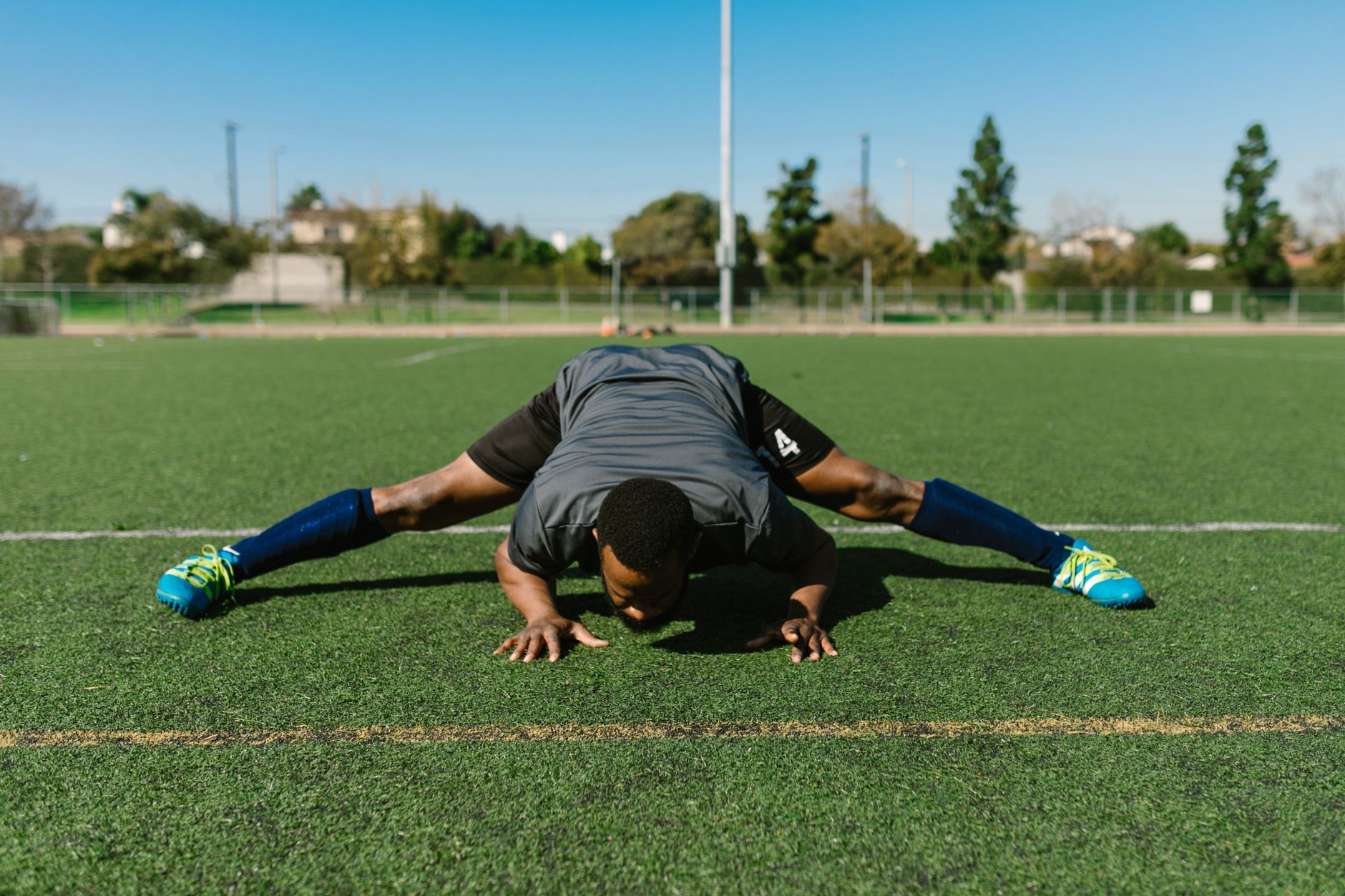
Photo by RDNE Stock project on Pexels
Recovery also needs measurable rules. Aim for 8–10 hours of sleep for adolescent players and approximately 7–9 hours for most adults, drink regularly rather than waiting until extreme thirst, and eat a meal containing carbohydrates and protein within a few hours after hard training. The specific edge case many beginners miss is back-to-back intensity: a Saturday match followed by maximum sprint testing on Sunday can leave the hamstrings under-recovered even when soreness feels mild. If your resting heart rate is noticeably elevated, sleep was poor, or your warm-up feels unusually heavy, replace maximal work with mobility and low-intensity technical practice. That is not weakness; it is load management.
How can players prevent football injuries?
Players reduce football injury risk by progressing gradually, warming up dynamically, strengthening vulnerable areas, using suitable footwear, and responding early to pain. A warm-up should last roughly 10–15 minutes and include jogging, mobility, balance, progressive accelerations, and ball work. The FIFA 11+ injury-prevention program is a well-known structured option, particularly for amateur teams, and its exercises target running technique, strength, balance, and controlled movement.
Use this safety checklist before hard training:
- Pain that changes your running pattern is a reason to stop, not push through.
- Increase weekly volume gradually instead of doubling it after missing practice.
- Check studs or turf shoes against the playing surface before every match.
- Train both legs, especially through single-leg strength and landing work.
- Replace wet or damaged grip socks and worn footwear.
- Consult a qualified medical professional for swelling, instability, sharp pain, or symptoms that persist.
One important distinction is soreness versus injury. General muscle soreness after a new strength session may improve within 24–72 hours, while sharp joint pain, bruising, swelling, or altered movement deserves attention. If you are under 18, involve a parent, coach, athletic trainer, or clinician rather than self-diagnosing from a social-media video.
What Are Three Predictions for the Next Quarter?
Over the next quarter, football training will likely become more individualized, more position-specific, and more focused on decision quality under fatigue. The first prediction is that small-sided games will replace more isolated running in progressive amateur programs because they develop repeated efforts alongside passing, scanning, and transitions. The second is that simple tracking, such as session ratings, sprint counts, and sleep notes, will become more common because inexpensive data can identify overload without requiring an elite performance department. The third is that recovery education will receive greater emphasis as coaches recognize that availability is a competitive advantage.
These predictions are not permission to buy every device or follow every online trend. The contrarian conclusion is that most recreational players do not need more information; they need better consistency. A notebook, a football, four cones, and a realistic weekly schedule can outperform an expensive wearable when the player rarely completes sessions. Coach’s Corner’s broader match analysis also supports this point: tactics and player statistics matter because context changes performance. Your training should do the same by considering position, opponent, surface, weather, and match demands rather than chasing one universal workout.
A useful 12-week progression looks like this:
- Weeks 1–4: Build touch quality, movement mechanics, and basic strength.
- Weeks 5–8: Add faster accelerations, pressure-based passing, and more demanding small-sided games.
- Weeks 9–12: Combine position-specific actions, repeated sprints, finishing under fatigue, and match simulation.
- Every fourth week: Reduce total volume by approximately 20–30 percent while maintaining clean technique.
Use your performance notes to decide whether to progress. If passing accuracy, sprint mechanics, and recovery are stable, add difficulty. If all three deteriorate, reduce the workload before injury or frustration forces a longer break.

Photo by Tim Mossholder on Pexels
How Should You Measure Football Training Progress?
You should measure progress through repeatable football actions, not appearance, exhaustion, or one unusually good match. Choose four to six indicators and test them every two or four weeks under similar conditions. Useful measures include completed passes through a target, weak-foot accuracy, successful first touches, 10-metre acceleration time, repeated sprint consistency, completed strength repetitions, and perceived recovery. Record the surface, footwear, weather, and rest period because a wet grass pitch and a dry artificial surface can produce different results.
A simple scorecard might include:
- 50 right-foot wall passes: successful target hits.
- 50 left-foot wall passes: successful target hits.
- Six 10-metre sprints: fastest time and average time.
- 20 first-touch receptions: clean controls into the intended zone.
- Three sets of split squats: repetitions completed with stable knee alignment.
- One recovery rating from 1 to 10 the following morning.
Do not celebrate a faster sprint if your technique breaks down or pain appears. Progress means producing a better action at the same workload, producing the same quality with less fatigue, or recovering more quickly between efforts. Keep testing limited; a maximal test every few days becomes another source of fatigue. For match-focused players, video review is especially useful: count scans before receiving, forward passes, recoveries after losing possession, and decisions made within two touches. For additional planning, visit our [Internal Link: football match preparation checklist].
Want to turn those measurements into a more disciplined routine?
A Practical 30-Day Football Training Plan
A 30-day plan should begin with consistency, then introduce pressure, speed, and match realism. During the first week, complete three sessions of 45–60 minutes and focus on clean technique. During the second week, add one extra short technical session or increase repetitions by no more than 10 percent. During the third week, include more one-touch passing, directional games, and controlled sprint work. During the fourth week, maintain intensity but reduce total volume by 20–30 percent so your body can absorb the work. This approach is safer than starting with daily two-hour sessions because connective tissue, especially the Achilles tendon and adductor muscles, often adapts more slowly than motivation.
A sample session for Day 10 could look like this:
- Warm-up: 12 minutes of jogging, mobility, balance, and progressive accelerations.
- Ball mastery: 10 minutes using both feet and changing direction every 30 seconds.
- Passing: 15 minutes of wall passes, receiving across the body, and weak-foot work.
- Speed: Six 15-metre accelerations with 60–90 seconds of recovery.
- Decision game: Four rounds of 3v3 or 4v4 lasting three minutes.
- Cool-down: 8 minutes of easy movement and breathing.
Eat enough carbohydrate before demanding sessions, include protein across the day, and do not train hard while dehydrated or ill. If you miss a week, restart at roughly 70 percent of your previous volume instead of trying to “catch up” in three days. That single rule has protected more beginners than any complicated training gadget I have seen.
For a deeper weekly structure, browse our [Internal Link: football fitness and conditioning guide].
Frequently Asked Questions
Q: What is football training?
A: Football training is a structured combination of technical, physical, tactical, and recovery work designed to improve match performance. It includes ball control, passing, dribbling, finishing, acceleration, strength, decision-making, and injury prevention. Beginners should usually train three to five times weekly, with at least one complete rest day and hard sessions separated by adequate recovery.
Q: How do I start training for football?
A: Start with three weekly sessions of 45–60 minutes focused on ball mastery, passing, basic strength, and gradual acceleration. Warm up for 10–15 minutes, use both feet, and finish with controlled recovery work. Keep a record of session duration, intensity, sleep, soreness, and pain so you can increase workload gradually rather than guessing.
Q: What is the difference between football fitness and general fitness?
A: Football fitness emphasizes repeated accelerations, decelerations, changes of direction, jumping, recovery, and technical decisions under fatigue. General fitness may improve endurance or strength without preparing you to control a ball after a sprint or press repeatedly. Footballers should combine strength and conditioning with small-sided games, interval running, and position-specific technical work.
Q: Why does my football training stop improving?
A: Progress often stalls because training lacks progression, recovery, measurement, or sufficient technical pressure. Repeating the same easy drill for months will not create a new stimulus, while training hard every day can cause fatigue that hides improvement. Change one variable at a time, such as speed, pressure, repetitions, or space, and test performance every two to four weeks.
Q: How much does it cost to train for football?
A: Basic football training can cost very little because a ball, four cones, suitable footwear, and a safe space are enough for many drills. A structured club, private coach, gym membership, GPS tracker, or video-analysis service may add costs ranging from modest monthly fees to substantial individual coaching charges. Prioritize qualified instruction, safe facilities, and consistency before purchasing technology.
Q: How can I train for football at home?
A: Train at home with wall passing, close-control touches, mobility, body-weight strength, and short-space dribbling if the area is safe. Use a 3-by-3 metre space for sole rolls, inside-outside touches, turns, and controlled passing against a suitable wall. Do not perform maximal sprints indoors, and avoid striking a ball near windows, vehicles, people, or surfaces that could cause a rebound injury.
Q: What should I do if football training causes pain?
A: Stop the painful movement, assess whether your gait or technique has changed, and seek qualified medical advice for sharp pain, swelling, instability, bruising, or persistent symptoms. Mild general muscle soreness may settle within 24–72 hours, but joint pain and altered movement should not be ignored. Return gradually only after normal movement is comfortable and a coach or clinician supports the progression.
The safest training plan is the one you can repeat without breaking down. Start with clean touches, sensible strength work, realistic conditioning, and honest recovery notes; then increase difficulty only when your body and performance are ready. Coach’s Corner can help you keep the wider football picture in view, but your next session should remain simple, controlled, and useful.
Ready to build a safer and smarter football routine?