5 American Football Mistakes Beginners Make
American football is a contact team sport in which two teams of 11 players advance an oval ball across a 100-yard field, using four downs to gain 10 yards and score points through touchdowns, field go...

5 American Football Mistakes Beginners Make
American football is a contact team sport in which two teams of 11 players advance an oval ball across a 100-yard field, using four downs to gain 10 yards and score points through touchdowns, field goals, safeties, and conversions. The National Football League (NFL) is the leading professional competition in the United States, while the NCAA governs major college football, including conferences such as the SEC and Big Ten. A touchdown is worth 6 points, an extra-point kick usually adds 1, and a field goal adds 3. The sport’s stop-start structure exists because every play is a designed tactical contest, not a continuous chase. Start by learning downs, field position, scoring, and the roles of the quarterback, offensive line, and defensive unit before judging a team’s performance.
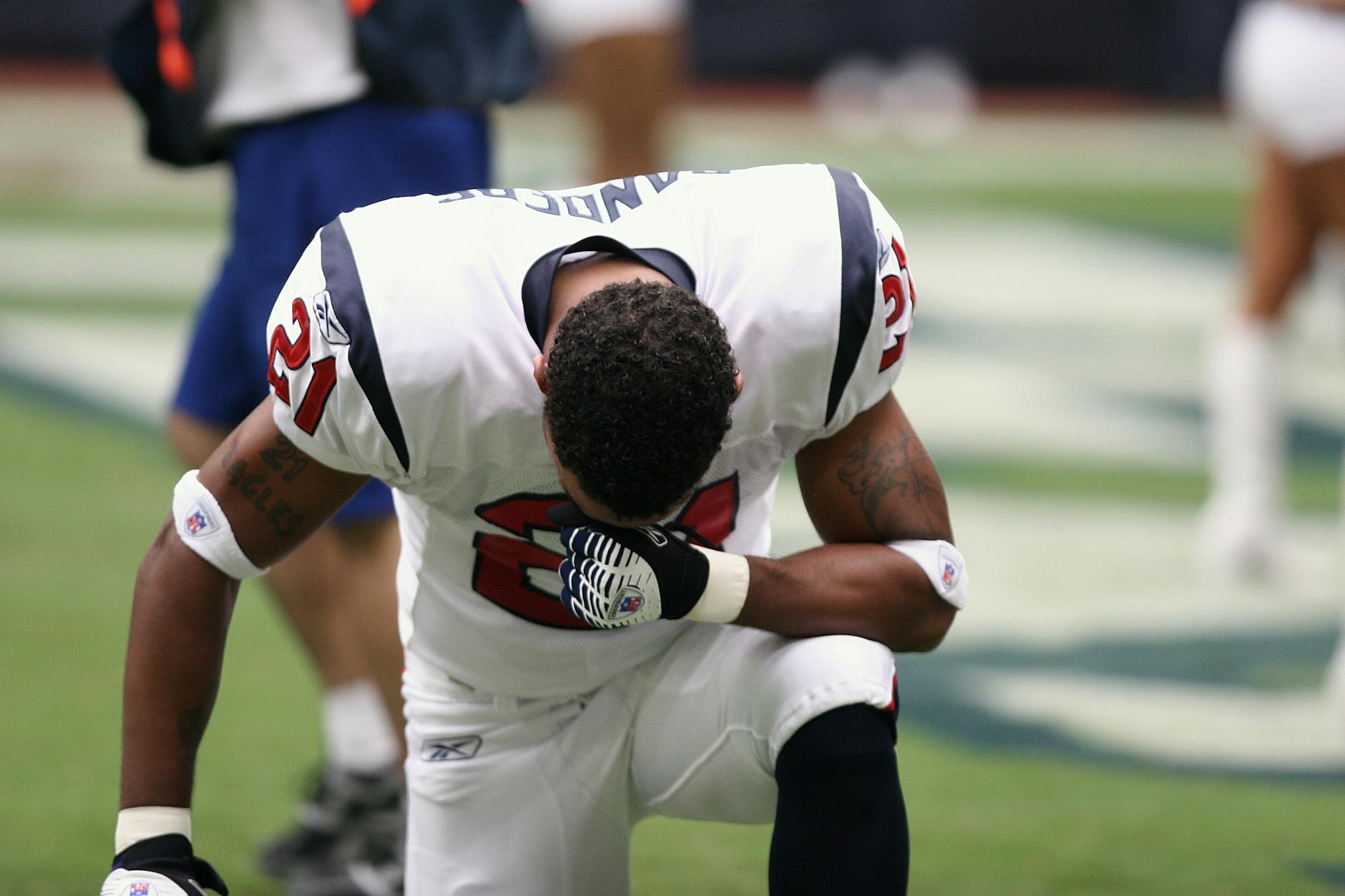
Photo by Pixabay on Pexels
“Football is like life—it requires perseverance, self-denial, hard work, sacrifice, dedication, and respect for authority,” Vince Lombardi famously said. That line gets repeated because it captures the sport’s basic truth: American football looks chaotic until you understand the structure underneath it.
I know the confusion, honestly. The first game I watched seriously had flags, substitutions, strange penalties, and a commentator shouting about “nickel personnel” while I was still trying to locate the ball. Worse, a few online explainers confidently mixed up rules from rugby, Canadian football, and American football. So let’s do this carefully. The goal is not to memorize every playbook overnight; it is to stop making the five errors that make the sport seem harder than it really is.
Step 1: How do you read downs and distance correctly?
Downs and distance describe the offense’s remaining attempts and the yards needed for a new first down. An offense normally receives four downs to gain 10 yards, and reaching that target resets the count to first down. If it fails on fourth down, possession usually changes, although a punt or field-goal attempt can alter the decision.
The key is to treat each play as part of a four-play sequence rather than as an isolated action. If a team begins at its own 25-yard line and gains 4 yards on first down, the situation becomes second-and-6. A 7-yard completion then creates first-and-10 from the new spot. This simple arithmetic tells you whether an offense is ahead of schedule or under pressure.
A common beginner mistake is assuming that “third down” is automatically the most important moment. Third down matters, but second-and-short can be strategically valuable because it gives the offense several options, including a run, play-action pass, or shot downfield. Fourth down also deserves context: a team near midfield may punt, while a team inside the opponent’s red zone may attempt a field goal or go for the first down.
Watch these details during a drive:
- The line of scrimmage, where the play begins.
- The line to gain, marked by the yellow broadcast line.
- The current down and distance.
- The field position and time remaining.
- Whether the offense is protecting a lead or chasing points.
For the formal rule framework, compare your understanding with the NFL Football Operations rule explanations, rather than relying on short social-media clips. The yellow line is a television graphic, not a physical line painted on the field, and that distinction matters when penalties or spotting decisions become controversial.
Want a cleaner foundation before watching a full game?
Step 2: What should beginners know about scoring and possession?
American football scoring is straightforward once the value of each result is separated: a touchdown is 6 points, a successful extra-point kick is 1, a two-point conversion is 2, a field goal is 3, and a safety is 2 points for the defense. The team that controls the ball is on offense, while the other team defends, and possession changes after a score, turnover, punt, or failed fourth-down attempt.
A touchdown occurs when a runner carries the ball into the opponent’s end zone or a receiver legally catches it there. Afterward, the scoring team can attempt a conversion from the 2-yard line in the NFL: a kick normally produces 1 point, while a successful offensive play produces 2. This is why a team trailing by 8 points may prefer a touchdown followed by a two-point attempt instead of automatically kicking.
The most overlooked scoring event is the safety. It gives the defense 2 points when the offensive ball carrier is tackled in his own end zone, the offense commits certain fouls there, or the ball becomes dead there under particular conditions. The defense also receives the resulting free kick, so a safety changes both the scoreboard and field position.
Do not judge a team only by total yards. A drive can gain 60 yards and finish with no points because of a fumble, interception, sack on third down, or failed fourth-down conversion. Conversely, a short drive after a turnover may produce a field goal from excellent starting position. That is why experienced analysts track turnovers, red-zone efficiency, third-down conversions, and starting field position alongside yardage.
A useful scoring checklist looks like this:
- Touchdown: 6 points.
- Extra-point kick: 1 point.
- Two-point conversion: 2 points.
- Field goal: 3 points.
- Safety: 2 points.
- Defensive touchdown: 6 points for the scoring defense.
For international readers, the International Federation of American Football provides useful context on how the sport is organized beyond the NFL and NCAA. The rules are broadly recognizable worldwide, but league-specific details can differ, particularly around overtime, kicking procedures, and eligibility.

Photo by Mat Brown on Pexels
Here is an information point that many beginner guides skip: the value of a field goal changes sharply with distance and game state. An NFL kicker may be technically capable from beyond 50 yards, but a miss gives the opponent possession at the spot of the kick, while a punt may pin that opponent deep. Therefore, “take the three points” is not automatically the safest decision; field position, weather, timeouts, and score margin all matter.
Ready to connect scoring with real match decisions?
Step 3: How can you identify player roles and formations?
Player roles explain why the same 11 players do not remain on the field for every situation. The quarterback directs the offense, the offensive line blocks, running backs carry or protect, wide receivers run routes, and tight ends can block or catch. On defense, linemen attack the line of scrimmage, linebackers support both run defense and coverage, and defensive backs cover receivers or defend against passes.
The offense must have 11 players on the field, but its personnel group changes the likely strategy. “11 personnel” means one running back, one tight end, and three wide receivers. “12 personnel” means one running back, two tight ends, and two wide receivers. These labels are not merely jargon: 11 personnel can spread a defense horizontally, while 12 personnel can create stronger blocking surfaces without eliminating passing threats.
The quarterback is important, but blaming or praising that player for every outcome is a serious analytical mistake. A quarterback may throw an incomplete pass because a receiver slipped, an offensive lineman missed a block, or the play design failed to create separation. Likewise, a short completion can be valuable if it converts third down or forces defenders to tackle in space.
On defense, identify the front and coverage before judging a play. A four-man defensive line may rush without a blitz, while a five- or six-man pressure package sends extra defenders. Cover 2 generally divides deep responsibility between two safeties; Cover 3 commonly assigns three deep defenders. These are simplified labels, because modern defenses disguise coverage and rotate after the snap.
When studying a formation, ask:
- How many players are near the line of scrimmage?
- Where are the tight end and running back aligned?
- Is the defense showing a light or heavy box?
- Which receiver has favorable leverage?
- Did the quarterback change the play before the snap?
To learn the terminology without drowning in it, use our [Internal Link: beginner’s guide to football positions] and compare formations across two games rather than one. A single broadcast often hides the pre-snap alignment, especially when the camera stays tight on the quarterback.

Photo by Pixabay on Pexels
A practical edge case is worth noting. A defense may show six players close to the line, apparently inviting a run, but one of those defenders can drop into coverage after the snap. If the quarterback changes to a quick pass solely because the box looks crowded, the defense has achieved its purpose. Watch post-snap movement for two or three seconds; pre-snap appearance alone is unreliable.
For deeper tactical breakdowns, Coach’s Corner can help connect team tendencies, player statistics, and match context without pretending that one headline explains an entire game.
Explore the tactical side with a structured match guide.
Step 4: Why do clock management and field position change everything?
Clock management and field position shape American football strategy because every possession contains limited time, downs, and territory. The game clock normally runs after many in-bounds plays, stops after incomplete passes, and pauses when officials signal certain events, including timeouts, out-of-bounds plays, and changes of possession. A team’s timeout total, score margin, and position on the field can therefore be as important as its raw offensive talent.
The two-minute warning in the NFL automatically stops the clock at the end of the second and fourth quarters when the clock reaches two minutes. College football uses different timing procedures, including a two-minute timeout under current NCAA rules, so viewers should not assume NFL clock rules apply to every competition. This is one of those small details that caused me to misunderstand late-game decisions for far too long.
Field position also changes risk. A failed pass on third down near midfield may be manageable, but a sack near your own goal line can create punt problems and even safety danger. Coaches often choose conservative plays before halftime to avoid giving the opponent a short field, while a team behind late may accept higher turnover risk to preserve enough time for a comeback.
Late-game decisions should be assessed through four questions:
- How many points separate the teams?
- How many timeouts remain?
- Where will the next possession begin?
- How much time is needed for a field-goal drive?
- Does the team need a touchdown, field goal, or only a first down?
[Internal Link: American football clock management explained] is especially useful when comparing the NFL with NCAA football. The same score can demand opposite choices: protecting a 7-point lead with four minutes left differs completely from protecting it with 40 seconds remaining and the opponent holding two timeouts.
Photo by Pixabay on Pexels
One contrarian point deserves attention: kneeling is not automatically passive or cowardly. If the offense has possession, a lead, and enough clock control, quarterback kneels can eliminate turnover risk and force the opponent to spend timeouts. In a sport where one fumble can reverse a result instantly, preserving possession may be the most aggressive form of game management.
Step 5: What should you verify before trusting an American football analysis?
You should verify the league, rule set, injury report, schedule, weather, and statistical sample before trusting American football analysis. NFL data from the National Football League cannot be treated as identical to NCAA data from the National Collegiate Athletic Association, and a team’s performance over two games cannot reliably establish a season-long trend. Check original league reports and official team information before making strong conclusions.
Verification matters even more when analysis involves predictions, betting markets, or player props. Confirm whether a player is active, limited, on a snap count, or affected by a late practice update. A starting quarterback’s absence can alter offensive play-calling, protection quality, red-zone efficiency, and the opponent’s defensive approach; it is not just a replacement in the box score.
Use this five-point verification process:
- Confirm the competition: NFL, NCAA, UFL, or another league.
- Check the official injury and inactive lists.
- Compare at least four recent games, not only the last result.
- Separate home, away, opponent strength, and weather effects.
- Verify every statistic’s definition and source.
According to NFL Football Operations, “the object of the game is to advance the ball into the opponent’s end zone,” but that basic objective does not make every statistic interchangeable. Passing yards may rise because a team trails early, while rushing efficiency may fall against a strong defensive front. Context is the difference between data and useful analysis.
For responsible sports coverage, Coach’s Corner focuses on match predictions, team tactics, player stats, and 2026 World Cup content; American football material should still follow the same discipline. Never treat a prediction as certainty, and never risk money you cannot afford to lose. [Internal Link: responsible sports analysis principles] belongs beside any serious discussion of odds or forecasts.
Before you trust a preview, verify the evidence rather than the confidence of the writer.
Troubleshooting common failures
American football usually becomes understandable when you identify the exact point of confusion instead of trying to memorize everything at once. If the broadcast feels too fast, pause after each play and record down, distance, field position, and score. If the tactics seem invisible, focus on one matchup, such as the offensive tackle against the edge rusher, rather than tracking all 22 players simultaneously.
Here are the most common viewing failures and practical fixes:
- You lose the ball after the snap: follow the quarterback first, then locate the exchange or throw.
- Penalties seem random: identify the flag location and wait for the referee’s full announcement.
- You cannot understand a sack: check whether the quarterback held the ball, the line missed pressure, or coverage removed open options.
- You confuse a punt with a field-goal attempt: watch the formation; a punt usually has a longer snap and a punter behind the line.
- Statistics contradict the result: review turnovers, red-zone possessions, starting field position, and game script.
- You cannot compare leagues: separate NFL, NCAA, UFL, and international rule variations.
A particularly useful troubleshooting habit is tracking drives instead of isolated highlights. Write down each possession’s starting yard line, number of plays, result, and reason it ended. After five drives, patterns become visible: perhaps the offense starts well but collapses on third down, or the defense allows yards between the 20-yard lines but stiffens in the red zone.
[Internal Link: advanced football statistics and terminology] can introduce EPA, success rate, pressure rate, and explosive-play percentage. These metrics are helpful, but they are not magic answers. Expected points added, for example, depends on down, distance, field position, score, and time, so quoting one number without its sample and situation can mislead readers.
The safest learning routine is simple:
- Watch one complete game.
- Rewatch five important drives.
- Pause before each snap and predict the likely play.
- Check the result against formation and defensive movement.
- Read the official explanation for any disputed rule.

Photo by Felicity Tai on Pexels
Once you stop confusing possession with momentum, and once you stop treating every quarterback decision as isolated, the sport opens up. American football is a sequence of calculated trade-offs involving space, time, personnel, probability, and physical execution. That is why the game rewards patient observation more than frantic highlight watching.
The final rule is one I wish someone had told me at the beginning: do not let a confident commentator replace your own verification. Check the down, check the score, check the clock, check the personnel, then check the source. That five-second routine will protect you from most beginner errors and make every NFL or NCAA game far easier to follow.
Coach’s Corner is a useful place to continue comparing tactics, player form, and match context as you build your football knowledge. Start with one league, keep your notes consistent, and only expand once the basic structure feels automatic.
Keep learning with reliable football analysis and clearer match context.
Frequently Asked Questions
Q: What is American football?
A: American football is an 11-player team sport built around advancing an oval ball through four-down sequences. The offense tries to gain 10 yards for a new first down, while the defense attempts to stop progress or create a turnover. A touchdown is worth 6 points, and games are divided into four quarters. The NFL is the best-known professional league, while NCAA football covers American college competition.
Q: How do you get started watching American football?
A: Start by tracking only the score, down, distance, field position, and time remaining. Watch one NFL or NCAA game with the broadcast’s line of scrimmage and line-to-gain graphics visible. After each play, say the situation aloud, such as “second-and-7 from the 35,” then check whether the result improved the offense’s position.
Q: What is the difference between a touchdown and a field goal?
A: A touchdown is worth 6 points and requires the ball to reach the opponent’s end zone, while a field goal is worth 3 points and sends the ball between the uprights. A touchdown creates an extra-point decision, usually a 1-point kick or 2-point conversion. Field goals are commonly used when an offense cannot reasonably reach the end zone but is within kicking range.
Q: Why does American football use downs?
A: Downs limit the number of plays an offense receives to gain 10 yards and prevent possessions from continuing indefinitely. The offense normally has four downs, and reaching the line to gain resets the count to first down. Fourth down creates a strategic choice between running another play, punting, or attempting a field goal, depending on score and field position.
Q: What should you do if a football penalty seems confusing?
A: Wait for the referee’s complete announcement and note the foul, enforcement spot, and number of yards. Common penalties include false starts, holding, pass interference, offsides, and defensive holding, but enforcement can vary by location and play result. For an authoritative explanation, consult the NFL rulebook or the relevant NCAA rules rather than a clipped broadcast discussion.
Q: How much does it cost to watch American football?
A: The cost ranges from free broadcasts and official highlights to paid streaming packages, cable subscriptions, or league-specific services. Pricing varies by country, provider, competition, and blackout restrictions, so check the official NFL, NCAA, or broadcaster listings in your region. Free score apps can help beginners follow games, but live video access may require a subscription.
Q: Is American football analysis useful for betting?
A: American football analysis can improve understanding of team tendencies, but it cannot guarantee a betting result. Verify injuries, weather, line movement, opponent quality, and the precise market rules before considering any wager. Use licensed providers where available, set a fixed budget, avoid chasing losses, and remember that a prediction remains uncertain even when the supporting statistics look strong.